Pavers and steps
$100 off a paver patio, walkway or stone steps in Syracuse
Take $100 off your first job, then tell us about the paver patio, front walk or steps you want in Syracuse. We scope it and connect you with a local masonry contractor. The surface is the easy part to compare. The base under it, and where the water goes, decide whether a patio is still flat after a few winters. Most patio quotes list the stone and the square footage. The questions below help you tell a patio that lasts from one that needs relaying.
- No obligationAsking for a price does not commit you. You can walk away after you hear it.
- Onondaga County focusThe projects and soil notes here fit Syracuse and nearby towns.
- Honest timing adviceIf your job belongs in spring, we say so early.
Tell us about the project
By sending this you agree to the terms and privacy policy. Prefer to talk? Call (315) 640-3590.
The Masonry Services Syracuse promise
- Asking for a price is free and never obliges you.
- We charge you no fee for scoping or the introduction.
- Your $100 credit follows the Terms, line for line.
- If an introduction goes wrong, we help put it right.
The masonry falls under the contract you sign with your mason.
When pavers and steps fits
A patio that heaves or sinks
A patio that lifts every spring, or has slabs or pavers that rock underfoot, often has too little base or a base that holds water. A rebuilt patio starts below the surface, not with new stone on top. If the old patio has a low corner that collects water, that corner is telling you where the drainage failed.
A new back-yard patio
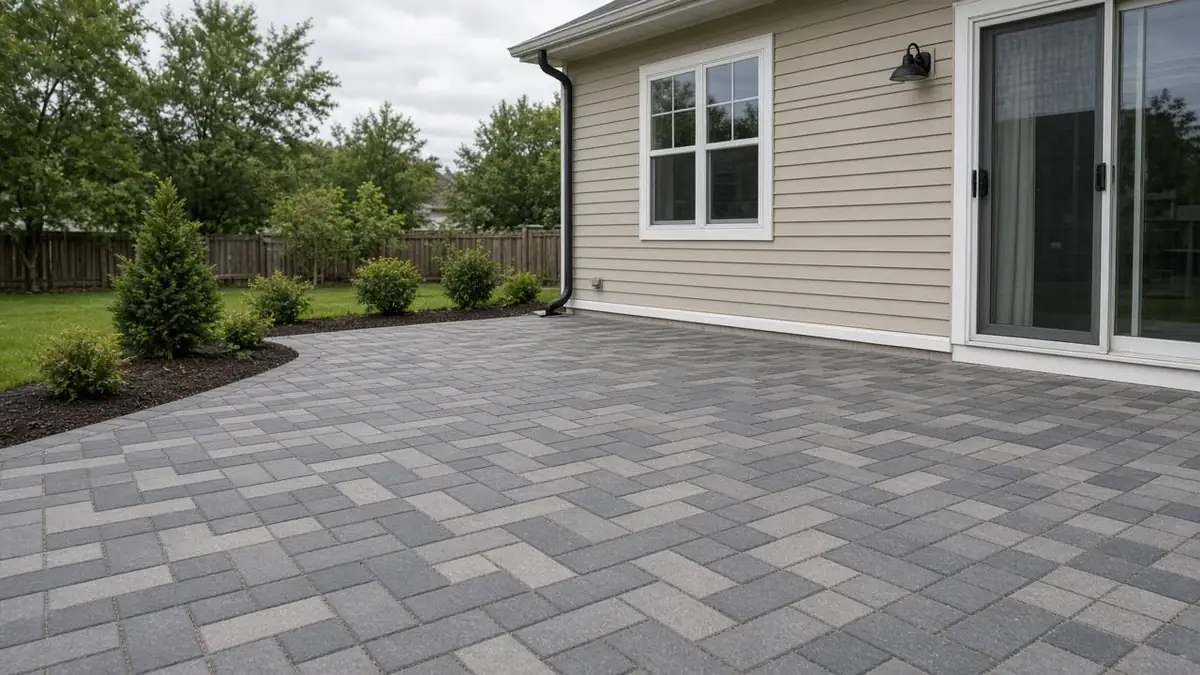
A new paver patio gives the yard a floor, with room for a table, a grill or a fire feature. The ground behind your house decides the base design. In well-drained ground such as much of the city, a 4 inch base is the starting point. Across the wetter northern towns such as Cicero and Clay, large shares of the mapped soil are poorly drained, and the base is where the money goes.
A front walk that puddles
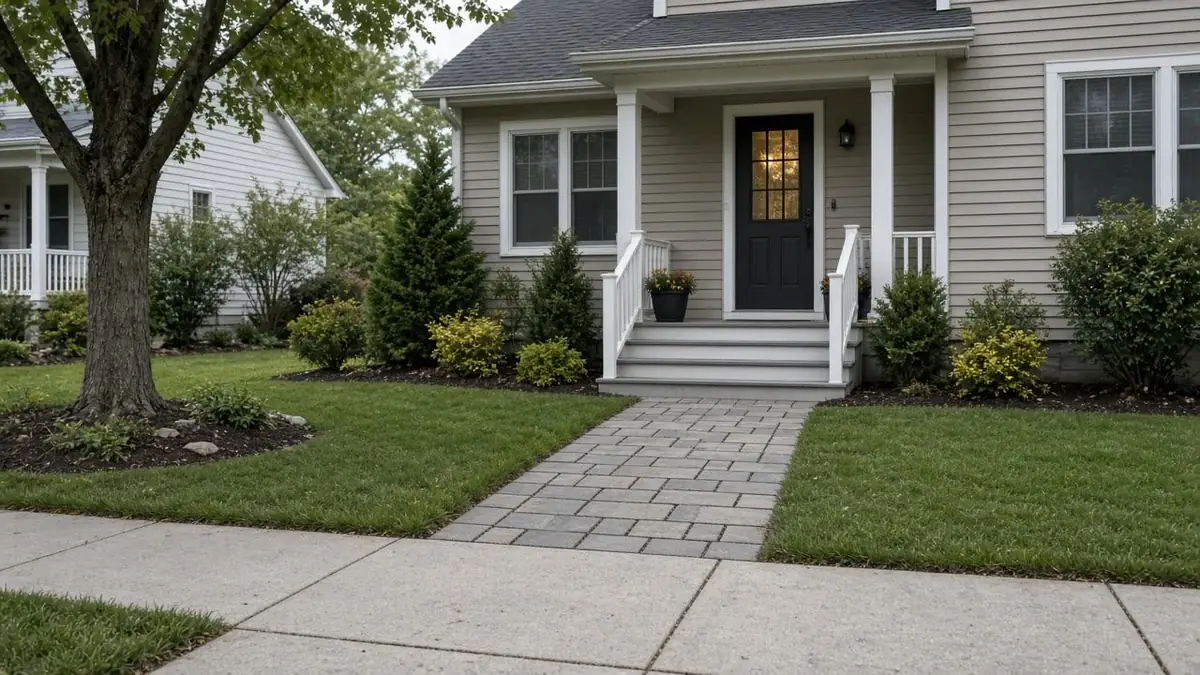
A walk that holds water ices over in winter. A drained paver walk with a slight slope sheds water to the lawn or a drain.
Stone steps and landings
New natural stone or precast steps and a landing at an entry. Steps are a safety detail, so rise, run and footing matter as much as looks. Natural stone steps weigh a lot, so the footing under them must be firm and the top surface should not collect water.
A paver parking pad
A paver parking pad carries more load, so it needs a thicker base than a patio.
The paver specification calls for at least 4 inches of compacted base for patios over well-drained soil, and says that in colder climates continually wet or weak soils need bases at least 2 to 4 inches thicker. The soil under the base should be packed to at least 98 percent of standard density. Base stone goes down and is packed in 4 to 6 inch layers, not dumped and tamped once.
Basis: Concrete Masonry and Hardscapes, Interlocking Concrete Pavement Institute
Quick answers
Questions about pavers and steps
Still unsure? Call (315) 640-3590 or send the short form.
How deep should a paver patio base be in Syracuse?
At least 4 inches of compacted stone over well-drained soil. Where the soil is continually wet or weak and the climate is cold, the specification says at least 2 to 4 inches thicker. The source does not print a total. Adding 2 to 4 inches to 4 inches gives 6 to 8 inches. Ask what depth is in the quote and how the soil was judged.
Why do some patios sink or heave?
Water and too little base are the usual suspects. A base that is thin, poorly compacted or saturated moves more than one built to the specification, which sets base thickness by traffic, soil, drainage and climate. Some settling is typical, but steady sinking in one spot is not.
Is some settling normal?
A small amount, yes. Unit paving is a flexible pavement and the spec itself says minor settling is typical. Steady sinking in one spot, or a low area that holds water, is not normal.
Do I need a drain under my patio?
Not always. The paver specification recommends drain pipes in clay or other slow draining soils subject to vehicular traffic, and a patio is walked on, not driven on. Where a yard stays wet, it is still worth asking. Niagara and Rhinebeck silt loams, which are mapped in the northern towns, have a seasonal wet depth of about 12 inches. Even on a well-drained lot, make sure the downspouts do not empty onto the pavers.
Pavers or poured concrete for the patio?
They are different jobs. Pavers sit on a flexible stone base and can be lifted and reset. Poured concrete is another trade. If you want pavers, bluestone or stone steps, we can scope them for you.
When should pavers be sealed?
Later, and only if you want the look or stain protection. A sealer applied over damp joints or a poorly drained base can turn cloudy. Use a breathable sealer, and expect to reapply it.
Can the work be done in winter?
Not well. A frozen subgrade or frozen base stone should not be built on. Early winter can work if the ground has not frozen, but spring is the safer start.
Does a patio need a permit in my town?
It depends on the town. Clay's permit page lists decks, porches and fireplaces, Cicero asks for a permit for fireplaces and other fixed or moveable improvements, and DeWitt asks for one for fixed or movable improvements apart from minor repairs. Your contractor or the town code office can confirm how a patio is treated. Do not assume a paver patio is exempt, and do not assume it is covered. Ask first.
What the work covers
- Concrete pavers and natural stone Interlocking concrete pavers, bluestone and flagstone laid as a patio or walk, with a border and a pattern chosen to suit the house.
- Excavation and base Removal of sod and soft soil, then compacted stone placed in lifts. This is the longest and most skill-dependent part of the job. The contractor checks the soil as it is dug and may change the base depth when the ground turns out softer than expected, so ask how changes are handled.
- Drainage and grading A finished slope that sends water away from the house, and, where the ground stays wet, a question for your contractor about whether a drain belongs in the plan. Downspouts that empty onto a patio load the base with water, so moving them is part of the plan.
- Edges, joints and finish Edge restraint that holds the field in place, joint sand swept in and compacted, and an optional breathable sealer chosen later, not at install.
Under the pavers
Read the stack from the top down. Ask where each layer appears in the quote.
- Pavers or stoneThe surface. Interlocking pavers act as a flexible pavement, and a small amount of settling is typical. Pavers may be set 1/8 to 1/4 inch above final elevation to allow for it.
- Bedding sandA thin screeded layer that levels the pavers. It is not meant to correct a wavy base, so the base has to be right before the sand goes down.
- Compacted aggregate baseCrushed stone placed in 4 to 6 inch lifts and compacted with a plate compactor. A patio needs at least 4 inches over well-drained soil, and 2 to 4 inches more over wet or weak soil in a cold climate.
- GeotextileA fabric used to separate the base stone from the soil below it, and to wrap drain stone.
- Subgrade and drainage slopeThe native soil, packed to at least 98 percent of standard density. Very wet or very fine soils may not reach that, and the specification says they may need stabilizing. The finished surface should slope at least 1.5 percent, which works out to about 3/16 inch per foot.
- Edge restraintA rigid border that stops the field from spreading. Without it, the outer pavers drift and the joints open.
How the project runs
- Describe the site
Where the water goes now matters as much as where the patio goes. Note any soft spots, downspouts, slopes and shade, and how close the area sits to the house.
- Settle the design and base
Choose the paver, the pattern and the edge. Ask the contractor to state the base depth and how the subgrade will be checked. A patio next to the house should slope away from the foundation, not toward it.
- Meet the contractor and compare
Compare written scopes on base depth, compaction, drainage and start date. The contractor sets the price. Ask how the contractor will handle wet ground, and who decides when to add base. Ask for any added base or drain cost in writing before it is added.
- Build, then wait to seal
A patio is walkable when it is finished. Wait before sealing so the joints and base can dry and any bloom can clear.
What moves the cost
The contractor sets the price. These are the things behind it for pavers and steps.
- Area, and how much of it is curves, borders and steps rather than straight field.
- Paver or stone type. Concrete pavers, bluestone and natural flagstone sit in different ranges.
- Excavation depth, which grows when the soil is wet or weak and the base has to be thicker.
- Drainage. A drain pipe in a stone trench is an extra. The paver specification recommends one in clay or other slow draining soils that carry vehicles, and on a patio over slow-draining soil it is a question to ask.
- Access for machines. Hauling stone by hand costs labor.
- Steps and landings, which add masonry and footing work.
- Season. Frozen base material or a frozen subgrade must not be built on, so a late start may mean waiting.
Book here and we credit $100 on your first job.
- We credit $100 toward your first project booked through this site.
- One credit for each household and property.
- Good through December 31, 2026.
- Your mason sets the project price.
The Masonry Services Syracuse promise
- Asking for a price is free and never obliges you.
- We charge you no fee for scoping or the introduction.
- Your $100 credit follows the Terms, line for line.
- If an introduction goes wrong, we help put it right.
The masonry falls under the contract you sign with your mason.
Masonry Services Syracuse(315) 640-3590. Read the full wording
Timing and the weather
The hardscape specification is blunt about cold: frozen base material should not be installed, and nothing should be placed over a frozen subgrade. A late-October patio can be built while the ground stays workable, but a January start usually means waiting for spring.
Pavers and steps in your town
Choose your town for the local view of this job.
City and inner ring
East and west
Worth reading first
Ready to price pavers and steps?
Send one short form or call. Nothing is booked until you say so.