Guide
Paver base depth, and why Syracuse patios move
A paver patio is only as good as the stone and soil under it. The short answer for Syracuse: start at 4 inches of packed stone, and expect more over wet ground. This guide gives the industry numbers for paver base depth and explains why some Syracuse patios stay flat while others rock, sink and hold puddles.
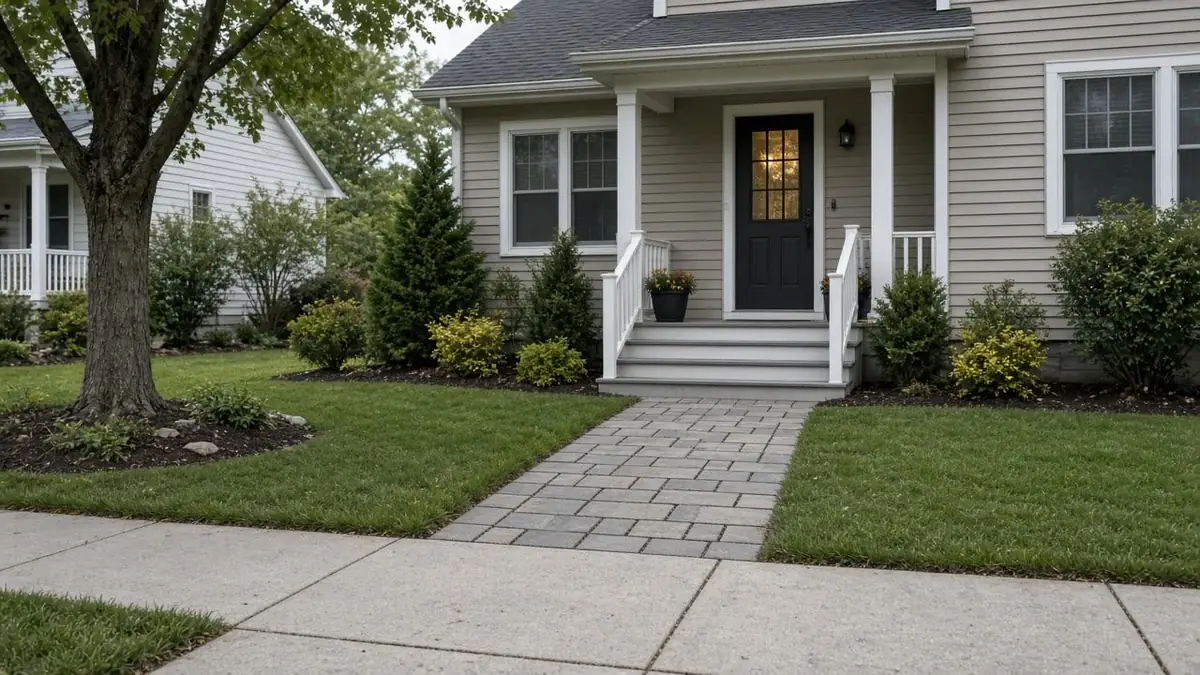
What is under a paver patio
From the top down, a paver patio is the pavers, a thin bed of bedding sand, a layer of compacted crushed stone called the base, sometimes a fabric, and then the native soil. The pavers get the attention. The base does the work. It spreads loads, holds the surface flat and lets water out.
Interlocking pavers are a flexible pavement. They are designed to move slightly. That is a strength, because the patio flexes with small changes instead of cracking. It is also why the base has to be right: a flexible surface follows whatever happens beneath it.
Basis: Concrete Masonry and Hardscapes, Interlocking Concrete Pavement Institute
The industry numbers for base depth
The Interlocking Concrete Pavement Institute publishes the base specification most contractors use. It says the thickness of the base is set by four things: the traffic, the soil type, how well the subgrade drains and the climate. For sidewalks, patios and pedestrian areas over well-drained soil, the minimum compacted base is 4 inches.
Then it adds a caution for colder climates. In a cold climate, continually wet or weak soils need thicker bases. The 2020 edition says at least 2 to 4 inches thicker. That is arithmetic you can do for a patio: 4 inches plus 2 to 4 more works out to 6 to 8 inches of compacted stone, a figure the specification does not print itself.
Why Onondaga County soil matters
Soil in the county varies enough that one rule does not fit every yard. The two largest soil map units pull in opposite directions. Honeoye silt loam is well drained. Niagara silt loam is somewhat poorly drained. Niagara and Rhinebeck silt loams have a seasonal wet depth of about 12 inches.
Town by town, the differences are big. In the City of Syracuse, only 1.5 percent of the mapped soil is poorly, somewhat poorly or very poorly drained, and 54.2 percent is well drained. In Cicero, 59.6 percent is in those wetter classes, and only 6.3 percent is well drained. In Clay the wetter share is 44.4 percent. In Marcellus, 61.9 percent is well drained and the largest map units are Honeoye silt loams. Camillus and Skaneateles have 14.2 and 13.0 percent in the wetter classes.
That is why to ask how your soil was checked before a depth is quoted. A 4 inch base that is correct in one town can be too thin two towns north.
Planning a patio or walk? Tell us where the water goes now and ask for a price.
Compaction is a number, not a feeling
The specification says compaction of the soil under the pavers is critical, and that it should reach at least 98 percent of standard Proctor density. It adds that this standard may not be achievable in very wet or very fine soils, and that stabilization may be needed in those cases.
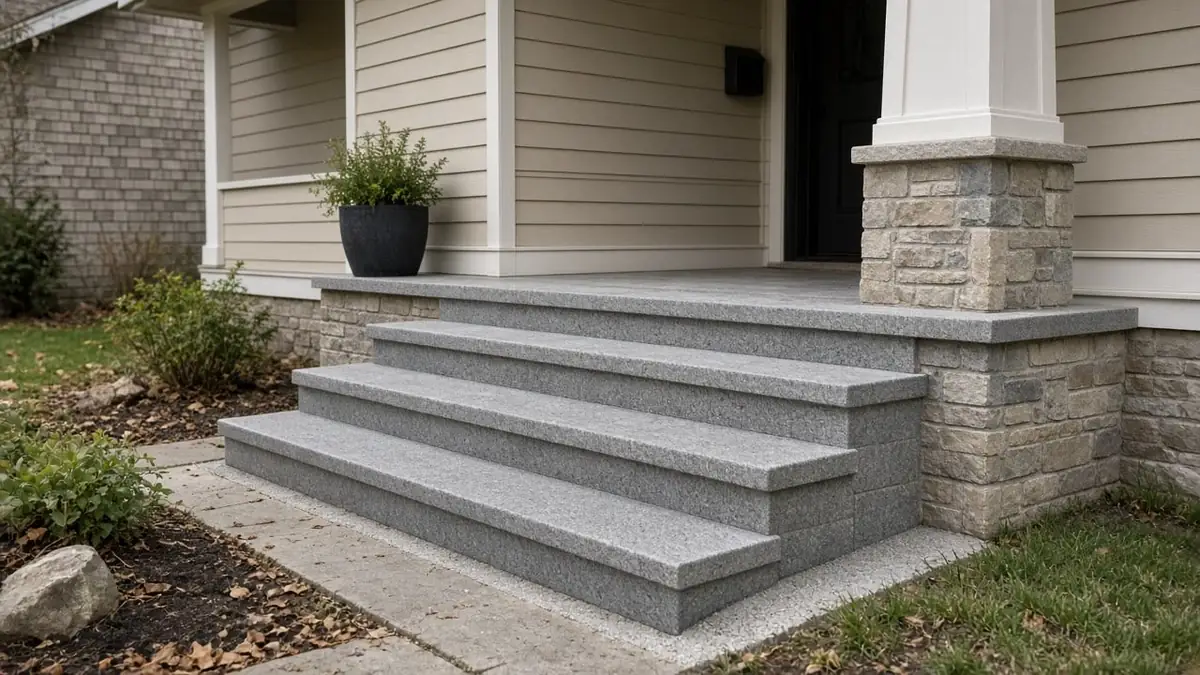
Base stone is placed and compacted in lifts of 4 to 6 inches using reversible plate compactors of 7,000 pound-force. If 8 inches of stone is dumped and tamped once, it falls outside the 4 to 6 inch lifts the specification describes. That is why depth alone is not the answer. Ask how many lifts, and with what machine.
Basis: Concrete Masonry and Hardscapes, USDA NRCS Soil Data Access (SSURGO)
Slope and drainage
A finished patio should drain. The specification calls for a minimum slope of 1.5 percent, which works out to about 3/16 inch per foot, falling away from the house. A flat patio holds water. A patio that slopes toward the foundation sends it to the basement wall.
The specification describes a typical subsurface drain as a 4 inch perforated pipe in at least 3 inches of No. 57 stone, wrapped in geotextile. It recommends drain pipes in clay or other slow draining soils subject to vehicular traffic. A patio is walked on, not driven on, so on wet ground the drain is a question to put to your contractor rather than a given.
Downspouts matter too. A downspout that empties onto a patio loads the base with water every storm. Moving it is cheap and may do more good than any other change.
Why patios move anyway
Even a good patio settles a little. The specification notes that the top of the pavers may be set an eighth to a quarter inch above final elevation to allow for minor settling, and states that some settling is typical of flexible pavements. That is normal.
Trouble looks different. A corner that keeps sinking, a low area that holds a puddle or a row of pavers that rocks underfoot points to a base problem. Common causes are too little base, poor compaction, no drainage in wet soil and downspouts or grade sending water in.
Winter is the stress test, and the specification asks for thicker bases over continually wet or weak soils in colder climates.
Planning a patio or walk? Tell us where the water goes now and ask for a price.
Reading your own yard before you ask for a price
You can learn a lot before anyone arrives. Walk the area after a heavy rain and note where water collects, where downspouts empty and whether the ground is soft underfoot a day or two later. Standing water the next morning suggests slow drainage. Look at the grade next to the house. It should fall away from the foundation, and the patio should too.
Tell the contractor what you found, and take photos. It speeds the scope and lets them judge whether a drain pipe belongs in the plan. A yard on Niagara or Rhinebeck silt loam, with a seasonal wet depth of about a foot, is a very different base problem from a well-drained gravelly lot in the city.
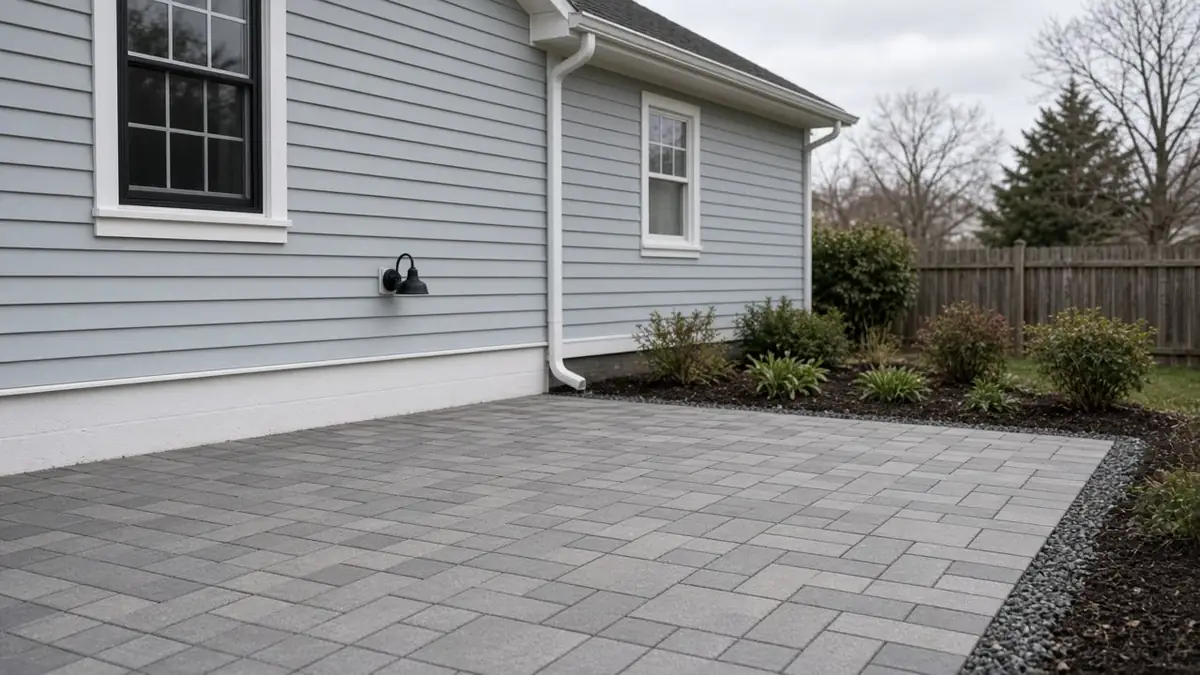
Walks, steps and edges
The same ideas apply to a front walk, with a few extras. A walk needs a slope across its width so water does not sit, and it needs an edge restraint that keeps the outer pavers from drifting. Steps need a firm footing, an even rise from the first step to the last and a landing that is not a puddle trap. Stone steps weigh far more than pavers, so the support under them matters even more.
Basis: USDA NRCS Soil Data Access (SSURGO), Concrete Masonry and Hardscapes
Cold weather and the base
The specification has one absolute cold-weather rule. Frozen base material should not be installed, and nothing should be placed over a frozen subgrade. A contractor who offers to start in January is quoting a job the specification does not allow, unless the ground has been kept thawed.
What to ask in a quote
- How deep is the compacted base, and why that depth for my soil?
- How many lifts, and what compactor?
- Is there fabric under the base, and a drain pipe where the soil is wet?
- What is the finished slope, and where does the water go?
- What is the edge restraint?
- When is the earliest start, and what happens if the ground freezes?
Compare the answers across written scopes. A patio with a thicker base costs more because it contains more. A quote that is thousands lower can be thinner underneath, and you may not see that for a few winters.
Planning a patio or walk? Tell us where the water goes now and ask for a price.
Sealing comes last
A sealer is not part of the base, but it is part of the patio's life. Sealing a base that drains badly or joints that are still damp can turn the surface cloudy. If you seal, use a breathable product, and expect to reapply it as it wears.
Book here and we credit $100 on your first job.
- We credit $100 toward your first project booked through this site.
- One credit for each household and property.
- Good through December 31, 2026.
- Your mason sets the project price.
The Masonry Services Syracuse promise
- Asking for a price is free and never obliges you.
- We charge you no fee for scoping or the introduction.
- Your $100 credit follows the Terms, line for line.
- If an introduction goes wrong, we help put it right.
The masonry falls under the contract you sign with your mason.
Masonry Services Syracuse(315) 640-3590. Read the full wording
Ready to price your project?
Planning a patio or walk? Tell us where the water goes now and ask for a price.