Outdoor fireplaces
$100 off an outdoor fireplace or fire pit in Syracuse
Take $100 off your first job, then tell us what you picture for an outdoor fireplace in Syracuse: a stone fireplace at the edge of the patio, a fire pit with seat walls or a small outdoor kitchen. We scope it and connect you with a local masonry contractor. Two questions decide this kind of job before any stone is chosen: what is the footing sitting on, and what does your town allow. The stone and the style are the fun decisions. They come after those two.
- No obligationAsking for a price does not commit you. You can walk away after you hear it.
- Onondaga County focusThe projects and soil notes here fit Syracuse and nearby towns.
- Honest timing adviceIf your job belongs in spring, we say so early.
Tell us about the project
By sending this you agree to the terms and privacy policy. Prefer to talk? Call (315) 640-3590.
The Masonry Services Syracuse promise
- Asking for a price is free and never obliges you.
- We charge you no fee for scoping or the introduction.
- Your $100 credit follows the Terms, line for line.
- If an introduction goes wrong, we help put it right.
The masonry falls under the contract you sign with your mason.
When outdoor fireplaces fits
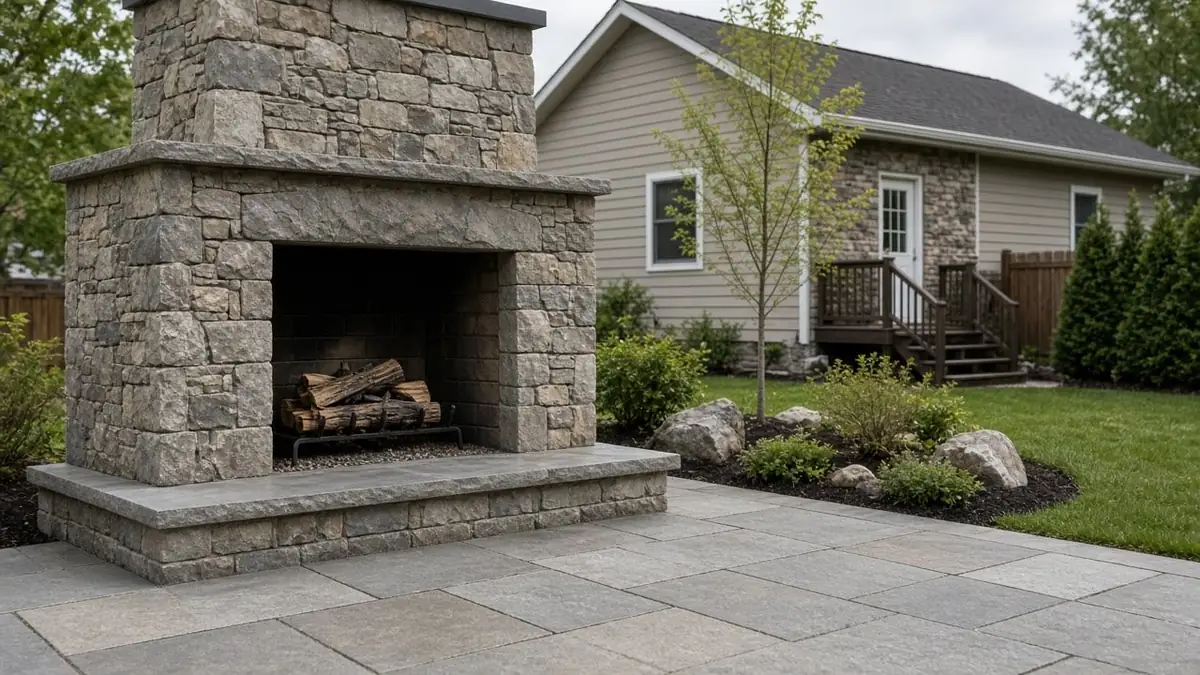
A fireplace at the edge of the patio
A stone or brick fireplace with a chimney gives a patio a focal point and a place to gather in spring and fall. It is a built structure, with a footing, and it needs a plan. Position matters: distance from the house, the prevailing wind and the neighbor's windows all count, and the lot lines and setbacks in your zone may limit where it can go.
A fire pit with seating
A masonry ring, a hearth pad and a low seat wall around it. Lower and simpler than a chimney, though local rules still apply. A seat wall around a fire pit is a low wall that does not hold back soil. A wall that holds back earth is a different structure and not part of this service.
A kitchen counter or pizza oven
A masonry base for a grill, a sink counter or a wood-fired oven. Gas, electric and plumbing are separate trades; the masonry shell is what we scope. Counter height, overhang and a heat-safe top are layout choices worth settling before the footing is poured.
Pillars, hearths and pads
Stone pillars, a raised hearth or a built-in bench that frames the space and carries a pergola or a light.
A feature that anchors a new patio
If you are already planning pavers, a fire feature is best designed in at the same time so the footing and the patio base work together.
New York's residential code leaves the frost depth for the local jurisdiction to fill in, and the state's Department of State says the jurisdiction may weigh the air freezing index, soil type, water table depth, local history and field experience. Ask your town's code office what depth applies before a footing is dug.
Basis: New York State Residential Code 2020, New York State Department of State
Quick answers
Questions about outdoor fireplaces
Still unsure? Call (315) 640-3590 or send the short form.
Do I need a permit for an outdoor fireplace?
It depends on the town. Clay and Cicero both list fireplaces among work that needs a building permit. A fire pit may be treated differently. Call your code office before you design anything. Neighbors, lot size and distance to the house may all play a part.
How big can a backyard fire be?
It depends on the municipality. The City of Syracuse Fire Prevention Bureau says recreational fires must be no larger than 3 feet across and 2 feet high, in a vessel listed for the purpose on a non-combustible surface, at least 25 feet from combustible structures, burning clean seasoned firewood. State open burning guidance covers campfires and small cooking fires and limits fuel to charcoal or clean, untreated wood, and towns, villages, cities and counties may adopt stricter rules. Check your own municipality.
How deep does the footing have to be?
The state code does not give one figure: the frost depth column in its climate table is left for the local jurisdiction to fill in. The code requires exterior footings to be at least 12 inches below undisturbed ground and frost protected, for example by extending below the frost line in your jurisdiction's table, unless an exception applies. A footing contractor and your code office decide it. NOAA's air freezing index table for Syracuse, based on 1951 to 1980 data, lists 1,213 degree-days at the 100 year return period, one of the inputs a jurisdiction can use.
Can I burn treated lumber or trash in it?
No. State open burning guidance for campfires and small cooking fires limits fuel to charcoal or clean, untreated wood, and treated lumber and household trash are not clean wood.
Is an outdoor fireplace different from a fire pit?
Yes. A fireplace has a firebox and a chimney and is a structure with a footing and often a permit. A fire pit is lower, open and simpler, but still needs a safe hearth, clearances and, depending on the town, local approval.
Can the work happen in winter?
Footings and mortar both have cold-weather limits. A winter job is possible with heated materials, covers and enclosures, but that protection adds cost, and spring is the better window.
Who handles the gas line for a gas fireplace or kitchen?
A separate trade handles gas, electric and plumbing, and a town may need to inspect it. This service covers the masonry shell, hearth and footing, and the contractor will say where the other trades begin.
Why does it matter that the fireplace is on a footing?
Frost moves soil. A masonry structure with no footing or a shallow one can tilt or crack as the ground freezes and thaws. The code asks for exterior footings at least 12 inches below undisturbed ground with frost protection, and a masonry fireplace footing at least 12 inches thick that extends 6 inches past the fireplace on all sides, unless an exception applies. Ask the code office whether a free-standing outdoor fireplace is covered.
What the work covers
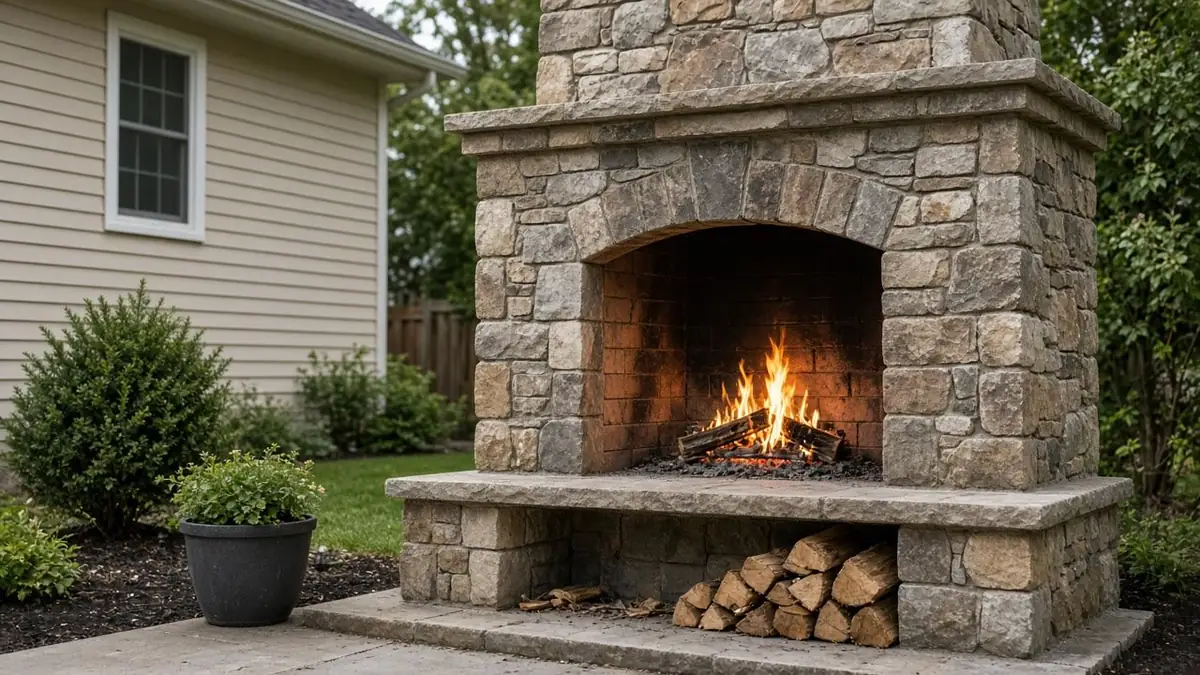
- Masonry fireplaces and fire pits The firebox, the shell and the facing in brick or stone, sized to the clearances and rules for your lot. Ask for the firebox dimensions and the lining material in the quote, not just the facing.
- Counters, ovens and seat walls Masonry bases and surfaces for outdoor kitchens, plus low seat and bench walls that do not retain earth.
- Footings and hearth pads The concrete base under the structure, sized to the load and set below the depth your jurisdiction uses for frost. All of New York falls in the severe weathering category, which drives air entrained concrete requirements, so ask what mix is planned.
- Clearances and planning Distances from the house, fences, trees and lot lines, and what the town needs to see before you start.
Under and inside the hearth
Read the stack from the top down. Ask where each layer appears in the quote.
- Firebox and refractory liningHeat-rated firebrick set with a refractory mortar, not ordinary mortar. The firebox takes the direct heat and is what the fire sees.
- Masonry shell and facingBlock or brick that carries the structure, faced with stone or brick. The shell holds the chimney and the weight.
- Hearth and thermal breakA non-combustible hearth extension in front of the opening, and clear space around it so embers and heat do not reach anything that burns.
- Concrete footingA concrete footing sized for the load. Code puts exterior footings at least 12 inches below undisturbed ground and also requires frost protection, for example by extending below the local frost line. For a masonry fireplace the code asks for a footing at least 12 inches thick that extends at least 6 inches past the fireplace on all sides, unless an exception applies. Ask the code office whether a free-standing outdoor fireplace is covered.
- Compacted base and drainageStone under the footing and a grade that carries water away, so the structure is not standing in a saturated bed through spring thaw.
How the project runs
- Describe the idea
Say whether you want a fireplace with a chimney, a fire pit or a kitchen. Include the size of the patio, the distance from the house and how you plan to use it. Have a rough sketch or photos of the patio ready for the contractor's call.
- Check the town first
Fire rules, setbacks and permits vary by town. Some towns, such as Clay and Cicero, list fireplaces among work that needs a building permit. In the Village of East Syracuse the village code office administers the building code, so ask it early about setbacks and footings.
- Meet the contractor and compare
Ask who handles the footing depth and drawings, and whether the town needs to see them. Compare written scopes. The contractor sets the price.
- Build and season it
Mortar and new footings need time to cure before the first fire. Your contractor will say how long to wait. Keep early fires small while the masonry dries out, and follow the contractor's advice.
What moves the cost
The contractor sets the price. These are the things behind it for outdoor fireplaces.
- Type of feature: a ring fire pit costs less than a fireplace with a chimney.
- Size and height, which drive the footing and the masonry volume. A tall chimney needs more footing and more scaffolding.
- Material: brick, block with stone face and natural stone cost differently.
- Footing and excavation, which grow with wet ground and local frost depth requirements.
- Kitchen work: counters, built-in grills and ovens add cutting, finishing and utility coordination.
- Permits and drawings where your town requires them.
- Season, since mortar and footing concrete have cold-weather limits.
Book here and we credit $100 on your first job.
- We credit $100 toward your first project booked through this site.
- One credit for each household and property.
- Good through December 31, 2026.
- Your mason sets the project price.
The Masonry Services Syracuse promise
- Asking for a price is free and never obliges you.
- We charge you no fee for scoping or the introduction.
- Your $100 credit follows the Terms, line for line.
- If an introduction goes wrong, we help put it right.
The masonry falls under the contract you sign with your mason.
Masonry Services Syracuse(315) 640-3590. Read the full wording
Timing and the weather
Footing concrete has its own cold rules. Fresh concrete can freeze below about 25 degrees Fahrenheit and lose more than half its potential strength, so footings need protection until they reach 500 psi, about two days after placement. Mortar for the shell follows the 40 degree rule as well, so a fall fireplace needs a plan for heated water and covers if nights are dropping below 40. In Syracuse a normal year has nearly 13 nights below 40 in October and 25 in November.
Basis: National Ready Mixed Concrete Association, Brick Industry Association
Outdoor fireplaces in your town
Choose your town for the local view of this job.
City and inner ring
East and west
Worth reading first
- The Syracuse masonry seasonWhen the nights drop below 40 degrees, new mortar stops curing.Read it
- Reading three masonry quotesWhy three quotes for one patio can differ so much.Read it
- Fire pits, outdoor fireplaces and New York rulesFuel, size and approvals for New York fire pits and fireplaces.Read it
Ready to price outdoor fireplaces?
Send one short form or call. Nothing is booked until you say so.