Guide
Fire pit laws in New York, and who sets the rules
Before you pick stone for an outdoor fire feature, learn the fire pit laws in New York: fuel, size and approvals. The state sets a baseline, and your town may add to it. This guide covers the state open burning guidance and the local checks that sit on top of it.
What the state rule covers
New York's Department of Environmental Conservation publishes open burning guidance for the state. It is not written for fire pits as a product, but it does address campfires and small cooking fires, and it says they may burn only charcoal or clean, untreated wood.
That guidance is a baseline. It does not tell you what your town, village or city allows on your lot.
Fuel matters
The state guidance is about fuel. The DEC says campfires and small cooking fires may burn only charcoal or clean, untreated wood. That rules out treated lumber and household trash, and it is why a fire pit that is fine for a campfire is not a place to burn construction leftovers.
Basis: Town of Clay, Town of Cicero
Towns and villages can be stricter
The state guidance is a baseline. The DEC says towns, villages, cities and counties may adopt stricter rules. Size, location, fuel and permits can all differ from one municipality to the next.
The City of Syracuse shows how specific local rules get. Its Fire Prevention Bureau says recreational fires must be no larger than 3 feet across and 2 feet high, in a vessel listed for the purpose on a non-combustible surface, at least 25 feet from combustible structures, burning clean seasoned firewood. That wording is written around a listed vessel, so ask the Bureau how it treats a built masonry fire pit.
So the correct answer to whether you can build a fire pit is a two-step answer. Does the state guidance allow the fire, and does your municipality allow it where you plan to build? The second answer can say no, or say yes with conditions, even when the first says yes.
Basis: New York State Residential Code 2020, New York State Department of State
Fire pit, fireplace and permits
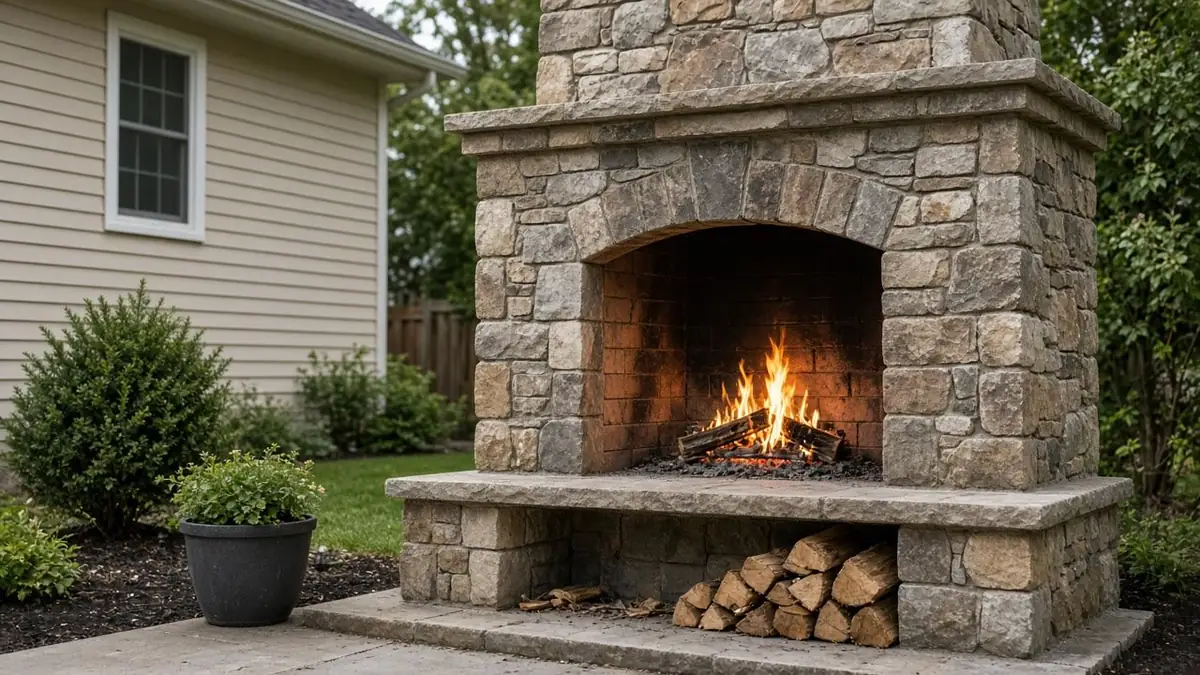
A fire pit is often a low, open ring of masonry. An outdoor fireplace has a firebox and a chimney and is a built structure, with a footing and weight. Municipalities often treat the two differently.
Two northern towns show how this can look. The Town of Clay lists fireplaces, stoves and inserts among work that requires a building permit. The Town of Cicero says a permit is needed to install or replace a fireplace, woodstove, chimney or other heat-producing device. A fire pit may or may not fall under that wording, and the code office can say. In the city, village or town where you live, the permit list or the zoning code is the document that decides.
Know what your town allows? Tell us about the fire feature you want and ask for a price.
The footing and frost question
A fireplace or masonry fire pit is heavy, and frost can move the ground under it. The state code does not give a single frost depth figure. It leaves a column in its climate table blank for the local jurisdiction to fill in, and the Department of State's own technical bulletin says the local jurisdiction provides the minimum footing depth below finish grade, drawing on inputs such as air freezing index, soil type, water table depth and local experience. The code also requires exterior footings to be at least 12 inches below the undisturbed ground surface, and that is a floor, not the answer. For a masonry fireplace, the code asks for a footing of concrete or solid masonry at least 12 inches thick, extending at least 6 inches past the fireplace or foundation wall on all sides, on undisturbed earth or engineered fill below frost depth. That section is written for masonry fireplaces, so the frost exceptions and the question for the code office still apply to a free-standing outdoor unit.
The code has some exceptions to frost protection for small free-standing accessory structures and for decks that are not attached to a dwelling. Whether a particular outdoor fireplace is covered by one of those exceptions is a question for the building code office, not for a brochure. Ask before the footing is poured.
Basis: New York State Residential Code 2020, National Ready Mixed Concrete Association
A walkthrough of the questions
When you plan a fire feature, a short list of questions can save a lot of trouble.
- What fuel does the state guidance allow, and what size and location does my municipality set? The state guidance names charcoal and clean, untreated wood.
- What does my town or village add? Look for ordinances on open burning, permits for fireplaces and setbacks.
- Does the project need a building permit? Fireplaces often do.
- What footing depth does my code office require for a structure like this?
- How far will it sit from the house, fences, trees and neighbors?
- Who submits drawings or permit paperwork?
Basis: Brick Industry Association
Know what your town allows? Tell us about the fire feature you want and ask for a price.
Gas, wood and what the masonry covers
The masonry contractor builds the shell, hearth and footing. A gas line, electric and plumbing for a kitchen are separate trades, and a municipality may want to inspect them. If you plan to burn wood, the chimney, spark control and clearances matter. If you plan gas, the appliance listing and the installer's instructions matter. Ask which trade is responsible for which part, and who orders inspections.
Weather, setting and timing
Fire features are a fall favorite, and that creates a timing trap. A fireplace footing poured in November faces the cold-weather rules for concrete, because fresh concrete can freeze below about 25 degrees Fahrenheit and lose more than half of its potential strength. Mortar for the shell has the 40 degree rule. The best time to build a fire feature is spring or summer, in time to use it in the fall.
Siting and safety, in practical terms
Beyond the legal minimum, a few practical choices make a fire feature safer and more pleasant. Keep it a good distance from the house, fences, sheds and low branches. Think about the prevailing wind and where smoke will go, because neighbors notice. Put the hearth on a non-combustible surface that extends beyond the fire, and never leave a fire unattended.
For an outdoor fireplace, the chimney height, the spark control and the clearance to anything that can burn all matter. Those are design details for the contractor and the code office, and they should appear in the written scope.
How a fire feature fits a patio
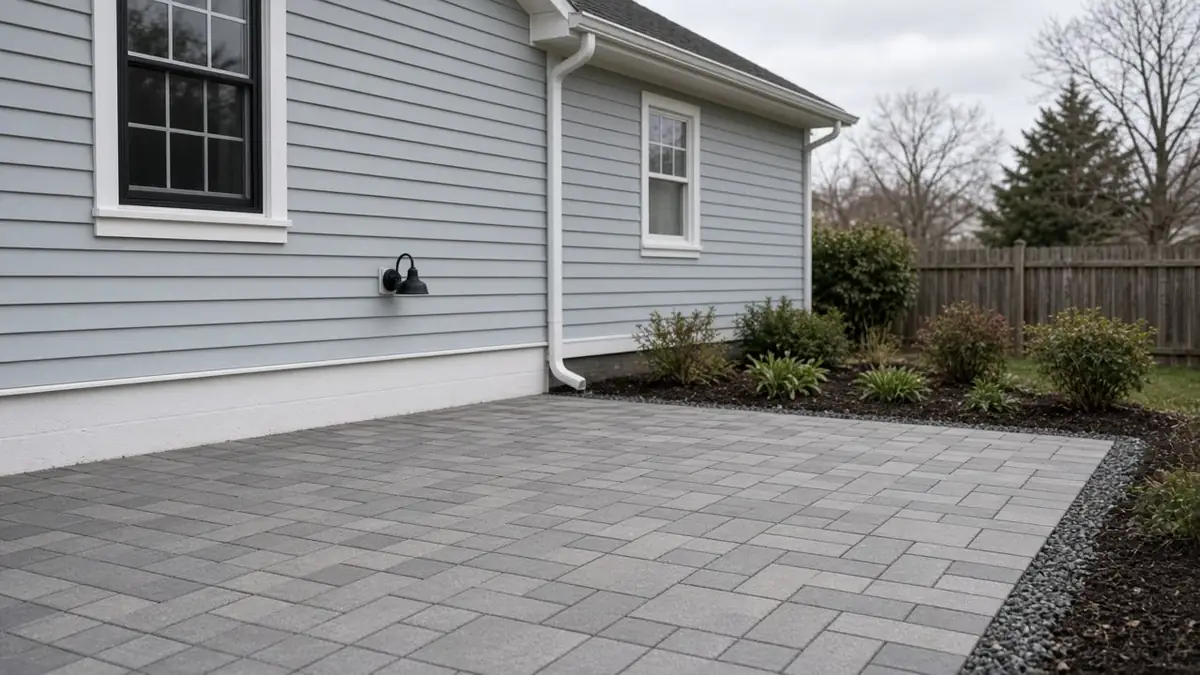
The best fire features are designed together with the patio. A paver patio needs a base that drains, and a masonry fireplace needs a footing, and the two should not fight each other. If the footing is poured after the patio base is compacted, the excavation breaks the base. It is cleaner to plan both at once, with the fire feature on its own footing and the paver base built around it.
Cost and planning for fire features
A simple masonry fire ring costs less than a full fireplace with a chimney, and a built-in kitchen adds more. Footing depth, wet soil and the height of the structure are the main drivers. If your town needs drawings or a permit, that adds time, so start the conversation in winter or early spring to have the work ready for summer.
Know what your town allows? Tell us about the fire feature you want and ask for a price.
What this guide is and is not
This is general information from public sources. It is not legal advice, and it does not replace your town's own rules or your code office. Rules change, and local ordinances vary. The reliable step is simple: call the code office before you design and again before you build, and keep the answer in writing.
Once you know what is allowed, the project becomes a design question: where the fire goes, what it sits on and how it fits with the patio. That is where a scope and a price help.
Book here and we credit $100 on your first job.
- We credit $100 toward your first project booked through this site.
- One credit for each household and property.
- Good through December 31, 2026.
- Your mason sets the project price.
The Masonry Services Syracuse promise
- Asking for a price is free and never obliges you.
- We charge you no fee for scoping or the introduction.
- Your $100 credit follows the Terms, line for line.
- If an introduction goes wrong, we help put it right.
The masonry falls under the contract you sign with your mason.
Masonry Services Syracuse(315) 640-3590. Read the full wording
Ready to price your project?
Know what your town allows? Tell us about the fire feature you want and ask for a price.